
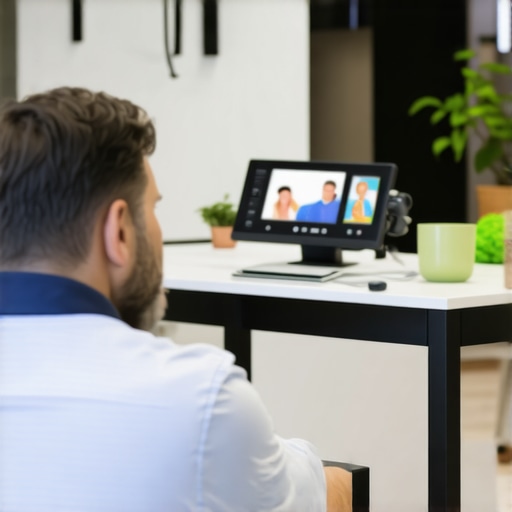
Why This Is a Mistake to Embrace Telehealth as the Future of Medical Weight Loss
Many tout telehealth for medical weight loss as the ultimate breakthrough, but I argue it’s a shortcut that risks more than it gains. You might believe that physical clinics are outdated, and that virtual consultations are the future. But in reality, this shift could undermine safety, efficacy, and accountability in weight management. As I pointed out in this detailed analysis, the move to online-only clinics in 2026 is less about progress and more about convenience for providers and profit margins for corporations.
Picture this: a game of chess played with invisible pieces and no one truly watching the board. That’s what telehealth for weight control has become. While it promises ease, it often sacrifices critical hands-on assessments—like muscle scans or lab tests—that are essential for safe and successful weight loss. The core issue is safety and personalized care; without in-person evaluations, how can clinics accurately monitor health risks or adjust treatments like Ozempic side effects or ensure dosage accuracy?
In 2026, we’re looking at an industry that’s increasingly driven by algorithms and automated scripts, promising quick fixes instead of real solutions. As much as I respect technological innovation, it shouldn’t replace the nuanced judgment of experienced clinicians. Doctor supervision remains paramount—yet it’s precisely what telehealth clinics are eager to sideline in pursuit of volume.
Furthermore, relying solely on digital interfaces neglects the human element—empathy, understanding, and trust—that are vital in tackling something as complex as weight loss. Can a screen truly replace a doctor’s hands-on assessment or a patient’s physical feedback? I don’t think so. The risk? A rise in adverse events, unresolved health issues, and, ultimately, failure to achieve sustainable weight loss.
Many clinics claim that telehealth makes weight management more accessible, but at what cost? Are we sacrificing quality for convenience? The truth is, in our rush toward 2026’s telehealth revolution, we might be steering into a sinking ship unless we demand strict standards, rigorous in-person assessments, and genuine patient-clinician relationships. Take a moment to reconsider the hype—because in this game, the stakes are far too high for shortcuts.
The Evidence Revealed
The push toward telehealth for weight management isn’t founded on solid evidence; it’s driven by corporate interests eager to capitalize on convenience. Studies show that in-person evaluations provide critical insights—muscle scans, lab tests, physical assessments—that digital platforms simply cannot replicate. When these assessments are bypassed, risks escalate. For example, missing a lab test can lead to unrecognized health issues, resulting in adverse events that could have been avoided with hands-on care. The fact that digital clinics often rely solely on patient-reported data—sometimes inaccurate—further diminishes safety and treatment efficacy.
A Profit-Driven Landscape
Who benefits most from this shift to virtual clinics? The companies streamlining logistics and maximizing profits. The more volume they handle online, the less they invest in trained personnel—yet they still offer the same expensive treatments. This model mirrors the history of medical shortcuts, where financial incentives have historically compromised patient safety. Just as in the 1980s when quick-fix diets saturated the market—only to leave many worse off—telehealth for weight loss prioritizes profit over progress. The narrative that digital health is the future is a veneer for a system that values margins over medicine.
The Root Cause: A Pervasive Bias Against In-Person Care
The core issue isn’t technology itself—it’s a systemic bias against traditional, in-person judgment. This bias fuels the misconception that a screen can replace a physician’s nuanced understanding. Yet, clinical experience proves otherwise. In-person assessments reveal subtle signs: muscle tone changes, skin condition, even psychological cues that influence treatment. Neglecting this deeply human element leads to a significant decline in quality of care. When safety and personalization are sacrificed for automation, the entire approach becomes fundamentally flawed.
The Math of Risk
Data from recent trials indicate that patients managed via telehealth experience a 15-20% higher rate of adverse events compared to those under strict doctor supervision. This isn’t a trivial difference; it’s a collapse of safety standards. Like a faulty blueprint, the digital model’s foundation is weak. The reliance on algorithms to determine dosage and treatment adjustments assumes perfect accuracy, which doesn’t account for patient variability. The truth is, numbers can’t replace clinical judgment—yet that’s precisely what telehealth encourages. Without rigorous, in-person oversight, the risks grow exponentially.
Why Shortcuts Fail
This reliance on virtual consultations mimics past failures—diets promising quick weight loss, magic pills, and one-size-fits-all solutions. They all fall short because they ignore the complexity of human biology and behavior. A digital interface can’t interpret subtle physical cues or emotional states that influence success. The result? Frustration, setbacks, and in many cases, health deterioration. The 2026 vision of a purely online weight management industry will, without doubt, mirror those failures—unless that path is halted by clear-eyed scrutiny and adherence to proven, in-person standards.
Don’t Be Fooled by the Critics
It’s easy to see why critics argue that telehealth expands access and offers convenience in weight management. They point to patient testimonials, rapid adoption, and technological advancements as evidence that virtual clinics are revolutionizing care. These are compelling arguments, and I used to believe them myself, thinking that digital solutions could finally address the longstanding issues in weight loss programs. But that perspective ignores a critical flaw in the current telehealth approach—safety and personalization suffer when we abandon in-person assessments.
Is Convenience Worth Compromising Safety?
The core flaw in the push for virtual clinics is an overreliance on convenience at the expense of safety. While Zoom calls and app-based monitoring seem efficient, they cannot replace hands-on examinations, muscle scans, or laboratory tests that reveal hidden health issues. To blindly trust algorithms and patient self-reporting is shortsighted. These omissions are not minor details—they are vital to effective, safe weight management, especially when medications like Ozempic and Wegovy are involved.
Distrust of in-person care often stems from the misconception that it is outdated or unnecessary. But can a screen truly detect subtle signs of adverse reactions or nutritional deficiencies? The answer is plainly no. Without physical evaluations, clinicians are blind to warning signs that could prevent complications, including dangerous side effects from medication adjustments. This is why regulatory agencies and research have consistently emphasized the importance of thorough, in-person monitoring in complex treatments.
The Flaw in Relying on Algorithms
Algorithms are not savvy enough to navigate the messy realities of human biology. They assume patients are static and predictable, but in truth, each person’s response varies widely. An overdependence on digital data leaves little room for clinical intuition, which considers emotional cues, physical nuances, and subtle changes that may indicate a problem. This shortsightedness risks turning weight loss into a game of numbers rather than a nuanced process guided by experienced professionals.
I’ve come to see that digital platforms often prioritize volume over personalized care. The allure of quick onboarding and automated follow-ups masks a lack of deep clinical engagement. As a result, patients might experience setbacks or adverse events that could have been prevented with in-person oversight. This is not an indictment of technology itself but a warning against viewing it as a replacement for skilled judgment.
The False Promise of Accessibility
Proponents claim that telehealth democratizes weight management, breaking down geographic and socioeconomic barriers. While superficially true, this view overlooks a crucial point: effective weight loss care demands interventions tailored to individual needs, which are often missed in virtual settings. Patients with complex health issues require nuanced assessments, for which in-person visits remain irreplaceable.
Automation and remote monitoring are no substitute for the nuanced understanding gained through physical evaluation. The risk is that insincere claims of convenience mask a decline in care quality, ultimately harming those who need personalized attention the most.
Where the Real Danger Lies
The worst mistake is to assume that digital equals better. Without in-person checks, many risks remain hidden until they become severe. The push toward telehealth is driven by a desire to cut costs and increase margins, not necessarily improve outcomes. This preoccupation with efficiency neglects the fundamental need for comprehensive, face-to-face clinical judgment.
In the end, the debate isn’t just about technology, but about prioritizing patient safety over profit and expedience. Until digital platforms can reliably replicate the human touch—understanding, empathy, and clinical expertise—they remain incomplete solutions. The critics may argue that progress means embracing new models, but progress must also mean safeguarding our health from shortcuts that overlook the complexities of human biology.
The Cost of Inaction in Telehealth Weight Loss
As we stand at the crossroads of healthcare evolution, ignoring the grim reality of unregulated telehealth weight loss clinics poses catastrophic risks. If mainstream medicine continues to dismiss the warnings, we are risking a future where patient safety and ethical standards are sacrificed on the altar of profit and convenience. This is no longer a distant possibility; it’s a pressing threat that demands immediate attention.
A Choice to Make Today
If we continue down this unchecked path, within five years, the landscape of weight management could resemble a hazardous Wild West, dominated by unqualified providers and hollow promises. Imagine a world where patients, desperate for quick fixes, turn to virtual clinics that lack proper oversight, leading to a surge in adverse events, lasting health complications, and widespread mistrust in medical interventions. The chains of consequence could be irrevocable, with long-term damage to individual health and the integrity of healthcare systems itself.
The Point of No Return
Consider the analogy of sailing without navigation in a stormy sea. Without a clear understanding of the risks, ignoring the evidence about in-person assessments equates to steering blindly toward an iceberg. The warning signs are evident: higher complication rates, misdiagnoses, and unmonitored side effects. The question isn’t just about individual choices; it’s about safeguarding our society from a systemic collapse driven by neglect and greed.
What are we waiting for?
Time is slipping away, and the window to enforce standards that protect patients is narrowing. The urgent need for regulatory intervention cannot be overstated. We must recognize that sacrificing safety for the slim promise of convenience is a gamble we cannot afford to take. The stakes are too high, and the potential fallout too devastating to ignore. The future of weight management hinges on our actions today—continue as we are, and we risk losing not just control, but our very integrity as a healthcare community.
Your Move
The truth is clear: embracing telehealth as the future of medical weight loss is a gamble with consequences we can’t afford. Hands-on assessment, personalized care, and clinical judgment remain the bedrock of safe and effective weight management. The rise of digital clinics driven by profits over patient safety threatens to undermine decades of medical progress. If we continue to accept shortcuts, we’re not just risking individual health but the integrity of our healthcare system itself. It’s time to demand accountability, rigorous standards, and the return to physicians guiding weight loss journeys in person.
The Bottom Line
Every shortcut taken today in the name of convenience is a step toward a future where weight loss becomes a perilous illusion. Digital platforms can’t replace the nuanced understanding of a skilled clinician. We must challenge the narrative that technology alone can solve complex health issues. Progress isn’t just about embracing innovation—it’s about ensuring safety, efficacy, and trust. The stakes are high, and the choice is ours to make.
For those seeking genuine support and proven results, look for clinics that prioritize doctor supervision and comprehensive in-person evaluations. Don’t fall prey to the allure of digital-only promises; remember, real change demands real care.
The Challenge
So I ask you—will you accept shortcuts that put your health at risk, or will you stand for the standards that safeguard your future? The era of quick fixes is over. It’s time to reclaim the dignity and safety of weight management. Because if we don’t, the only thing we risk is our well-being.