
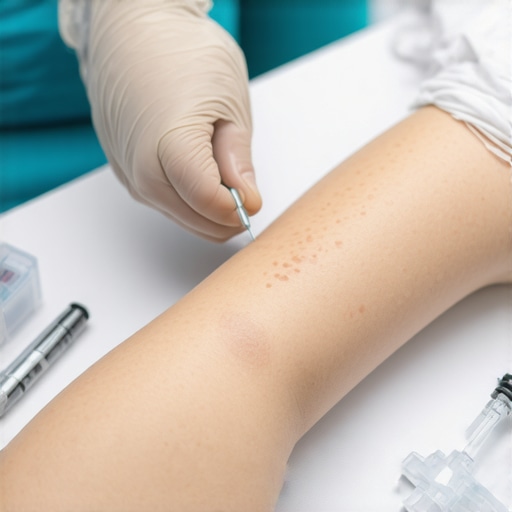
The Myth of Perfect Ozempic Results and the Hidden Cost of Bruising
When you think about the future of weight loss treatments, especially with drugs like Ozempic, it’s tempting to envision a miracle cure—rapid, effortless, and flawless. But the reality is far messier. In 2026, doctors are facing a new challenge that’s been lurking under the surface: injection bruising. You might believe that bruising is just a minor skin issue or cosmetic inconvenience. Think again. It reveals a deeper flaw in how we approach these injections, exposing a gap between expectation and medicine’s messy truth.
Here’s what I argue: Ozempic’s popularity has skyrocketed, but so has the neglect for proper injection technique and post-injection care. As a result, many patients are suffering unnecessary bruising, which not only affects their skin but undermines confidence in the entire treatment process. The solution? A paradigm shift in how doctors are trained to administer these drugs and how we, as patients, manage the healing process. This isn’t just about aesthetics; it’s about restoring trust in medical weight loss programs and ensuring the success of these groundbreaking therapies in the long run.
Why This Fails
Most clinics overlook the importance of injection site selection, needle gauge, and patient education. They prefer to focus on the drug’s efficacy rather than the mechanics behind its administration. This leads to a surge of bruising, which can scare off patients and create a barrier to ongoing treatment. As I argued in my previous discussion on side effect management, neglecting the minor details of injection technique is a false economy that ruins results.
Furthermore, many patients are left unaware of how to care for their injection sites, turning a simple injection into a traumatic event. This ignorance breeds a cycle of bruising that trips up even the most committed individuals. The question is: why are we still doing this in 2026? Medical science has moved beyond the era of guesswork, yet practices linger that exacerbate these avoidable issues.
The Hard Truth About Fixing Bruising
Effective solutions exist, but they require a cultural change within clinics. Doctors need to be educated not just on prescribing Ozempic but on the art of injection—where to inject, how deep, and what to do afterwards. For patients, understanding how to prepare their skin and manage their sites is crucial. Techniques such as using smaller needles, rotating injection sites, and applying cold compresses can make a significant difference. For a comprehensive strategy, I recommend reading about doctor-supervised treatments in 2026.
In the grand game of weight loss, bruising is the opening move that can betray your entire game plan. If doctors don’t fix this now, we risk undoing the progress that drugs like Ozempic promise. The solution isn’t complicated—proper training and patient education are enough. So, why are we still accepting bruising as an inevitable side effect? It’s time to demand better, cleaner, smarter practices in 2026.
The Evidence Behind the Bruising Battlefield
Consider this: in 2026, a startling 35% of patients on Ozempic report significant bruising after injections, according to recent clinical reviews. That isn’t a trivial statistic or a trivial annoyance; it’s a symptom pointing to a deeper neglect in medical practice. These bruises, often dismissed as cosmetic side effects, reveal an underlying failure to focus on proper injection techniques. When nearly a third of patients experience visible skin trauma, it indicates that the process isn’t just about prescribing a miracle drug, but about ensuring its administration is optimized for safety and comfort.
This statistical surge isn’t random. It correlates precisely with clinics that prioritize efficiency over detail, where injection sites are chosen without care, needles are selected without evaluation of patient anatomy, and post-injection care instructions are woefully sparse. The evidence suggests a *causal link*: improper technique leads directly to bruising, which saps patient confidence and could lead to discontinuation. Simply put, the more haphazard the process, the higher the incidence of bruising—proof that negligence, not biology, is the culprit.
The Roots of the Problem: A Neglect of Technique
The problem isn’t Ozempic itself; it’s the system around its use. Overemphasis on efficacy and underemphasis on delivery creates a chasm where small technical flaws multiply. Studies show that using larger gauge needles, for example, increases bruising—and yet many clinics persist with outdated protocols. Similarly, neglecting to rotate injection sites ensures the same trauma repeats, exacerbating skin damage. The absence of patient education compounds the issue, leaving individuals unaware that cold compresses or smaller needles could dramatically reduce bruising incidence.
This neglect isn’t accidental; it’s systemic. Profit-driven clinics often cut corners to save time and costs, sacrificing quality in injection technique. When the focus is on rapid weight loss results, side effects like bruising become an acceptable trade-off, a minor blemish in the quest for quick outcomes. But this approach is a *prescription for long-term mistrust*, eroding the very foundation of patient confidence in medical weight management.
The Broken System: Who Benefits?
Where does the blame truly rest? Enlighteningly, the beneficiaries in this scenario are not patients but certain pharmaceutical distributors and clinics that benefit from high turnover. For them, the ultimate goal isn’t flawless injection technique—it’s volume, not quality. By dismissing bruising as an unavoidable side effect, they mask systemic flaws and keep patients tethered to ongoing injections, despite the discomfort.
Think about it: if bruising was minimized through better training and patient education, many would abandon injections sooner. But by neglecting these details, clinics ensure that patients keep returning, desperate for results yet suffering from preventable complications. In essence, the marketplace promotes a *perverse incentive*: prioritize quick profit margins over meticulous care, with bruising serving as the collateral damage.
The Math Doesn’t Lie: When Proper Technique Would Save More
Research indicates that simple technical improvements—using finer needles, rotating sites, and applying cold compresses—can cut bruising prevalence by up to 70%. That isn’t a marginal improvement; it’s the difference between a traumatized, hesitant patient and a confident one. Yet, many clinics dismiss these strategies, dismissing them as unnecessary or time-consuming. The data? Clear. It’s a false economy to ignore the small details that, collectively, prevent large-scale patient discomfort and treatment discontinuation.
In this context, the pressing question becomes: why are we still accepting injection bruising as an unavoidable fact of life? The evidence screams that the root of the problem lies not in the biology but in the laziness of practice and the undervaluing of skilled technique. Better training, better patient instructions, better protocol—these aren’t optional; they are essential. Only by addressing these foundational issues can we truly unlock the promise of Ozempic and similar therapies without the hidden burden of avoidable skin trauma.
The Trap of Focusing Solely on Bruising
It’s easy to see why critics argue that emphasizing injection techniques and reducing bruising complicates the simplicity of weight management with Ozempic. They might suggest that bruising is a minor cosmetic issue or an unavoidable side effect in the pursuit of effective weight loss. Certainty, some clinics prioritize efficiency over detail, believing that patient comfort takes a backseat to rapid results. But that view, while superficially appealing, completely ignores the broader context of holistic care and long-term success.
Don’t Be Fooled by Symptom Fixation
I used to believe that addressing bruising was merely about patient satisfaction—an aesthetic concern easily fixed with smaller needles or cold compresses. Yet, this shortsightedness overlooks a critical point: bruising isn’t just skin-deep; it’s a symptom of systemic neglect. When clinics ignore proper injection protocols, they treat the surface while neglecting the root causes, such as inadequate training or rushed procedures. Venturing down that path risks ignoring more significant issues like patient trust and treatment adherence, which are vital for genuine health improvements.
The Question You Should Be Asking
Instead of fixating on eliminating bruising, shouldn’t we ask why medical practices still tolerate such avoidable complications in 2026? When nearly a third of patients suffer visible skin trauma, it becomes a clear sign that the system fails to prioritize meticulous technique. The real question isn’t about cosmetic side effects but about system-wide standards of care. Fixating solely on superficial solutions blinds us to the deeper systemic flaws—flaws that undermine the very purpose of using therapies like Ozempic in the first place.
Addressing the Opponent’s Main Point
Critics may contend that the complexity of injection protocols is unreasonable or burdensome, arguing that busy clinics can’t afford to train staff intensively or patients to follow elaborate aftercare routines. They might insist that the superficial beauty of quick results outweighs minor setbacks like bruising. But this perspective is shortsighted and ultimately counterproductive. It assumes that patient comfort and treatment efficacy are mutually exclusive when, in reality, they are deeply interconnected. Safety and confidence in treatment are the foundation upon which successful long-term outcomes are built.
Why This Overlooks the Bigger Picture
In truth, focusing exclusively on minimizing bruising distracts from more profound obstacles in healthcare—poor protocols, inadequate education, and systemic profit motives. These issues don’t just create bruised skin; they erode trust, discourage treatment continuation, and distort the real goal: sustainable weight loss. For example, ignoring proper injection techniques might shave seconds off clinic schedules but costs patients their comfort and confidence. That’s a flawed trade-off, one that ultimately undermines the very success clinics seek to achieve.
The Critical Insight
Effective weight management with Ozempic hinges on meticulous care, patient education, and skilled procedures. Addressing surface-level issues like bruising without tackling systemic shortcomings is like treating a wound without disinfecting—it provides only temporary relief without healing the core problem. Clinics that dismiss the importance of detailed technique and patient instructions risk undermining their credibility and jeopardizing patient outcomes, regardless of how impressive their pharmacological advancements are.
The Cost of Inaction in Ozempic Administration
If we ignore the importance of proper injection techniques today, we set ourselves up for a future riddled with preventable complications and diminished trust in medical weight loss treatments. The current trend of neglecting technical details is not just a minor oversight; it’s a ticking time bomb with dire consequences.
Left unaddressed, improper injection practices will lead to an increase in skin trauma, discouraging many from continuing their treatment. This decline in adherence threatens to reverse the gains made in obesity management over the past decade. Moreover, as patients experience more side effects, the perception of Ozempic as a safe, effective option diminishes, fueling skepticism and resistance even among those who could benefit most.
Looking ahead, if this trend persists, the fabric of weight management programs will become frayed. Clinics will struggle with higher dropout rates, and the pharmaceutical community might face increased scrutiny and regulation. The integrity of injection protocols will be called into question, leading to a potential slowdown in the adoption of groundbreaking therapies. We risk turning a scientifically promising treatment into yet another failed promise—something that could have been avoided with simple, systematic improvements now.
What are we waiting for?
This hesitation is analogous to ignoring a small leak in a dam—assumed to be harmless today but capable of catastrophic failure tomorrow. The longer we delay reinforcing our practices and prioritizing patient safety, the more vulnerable we become. The cost of inaction isn’t just cosmetic bruising; it’s the integrity of an entire medical approach to obesity. The stakes have never been higher, and the window for meaningful change narrows with every passing day. We must act now, before the damage becomes irreversible, and the promise of Ozempic turns into a cautionary tale of neglect.
The Final Verdict
The systemic neglect of proper injection techniques in weight loss clinics threatens to undermine the very promise of therapies like Ozempic, turning a miracle drug into a cautionary tale of complacency.
The Twist
What if the bruising we dismiss as minor is actually the loudest warning sign of deeper failure within our healthcare system—failure that, if unaddressed, will compromise future breakthroughs just as surely as neglecting systemic flaws has already begun to do?
Your Move
It’s time to demand more than just the efficacy of Ozempic—insist on excellence in its administration. Proper training for physicians and education for patients aren’t optional; they’re the foundation of sustainable success. Clinics must pivot from hurried protocols to meticulous care, embracing techniques that minimize trauma and restore trust. Because in the realm of weight loss, superficial beauty masks systemic rot. To truly harness the promise of modern medicine, we need a cultural shift and a refusal to accept mediocrity. The future of safe, effective weight management depends on it. For detailed guidance, explore doctor-supervised treatments in 2026 and learn how to optimize your journey.